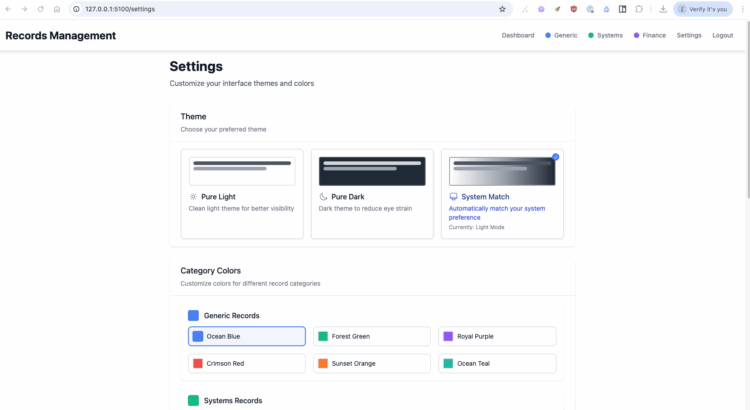
Following the progress recorded in my earlier post last November (https://blog.yannicklin.net/diary/2025/11/5813), where I outlined the initial structure of the project and several early-stage concerns, this month’s work focused on consolidating the system and resolving the issues that have accumulated since then. January has been about tightening the fundamentals — removing outdated components, correcting inconsistencies, and strengthening both code and documentation to support future development.
Below is a structured summary of the main updates applied throughout January 2026.
OpenCode Format Migration
The previously mentioned Gemini-based workflow has now been fully replaced with the OpenCode format. This shift addresses several of the limitations highlighted in the earlier post, particularly around predictability and maintenance overhead.
Key changes
- Complete removal of Gemini-specific parsing logic
- Unified and simplified ingestion and validation behaviour
- Cleaned and updated record structure handling
- Elimination of redundant or outdated sample files
- Consistent naming and file-processing rules across modules
This transition provides a more stable base for upcoming features and aligns the internal workflow with the direction outlined last November.
Documentation Restructuring
In the previous post, I noted that documentation at the time was fragmented and partially experimental. This cycle focused on addressing exactly that problem.
Improvements
- Rewrote several sections to eliminate conflicting explanations
- Normalised formatting and structure across all documents
- Removed partial drafts and legacy artifacts
- Clarified what is implemented, what remains open, and what is intentionally out of scope
- Performed consistency checks to ensure terminology does not drift
The documentation now reflects the actual state of the system, without speculative or leftover content.
UI, Responsiveness, and Behavioural Improvements
Some of the UI issues mentioned earlier — especially inconsistent rendering and mobile behaviour — were addressed in a dedicated cleanup effort.
Updates
- Improved mobile responsiveness
- Corrected layout inconsistencies
- Streamlined template behaviour
- Refined search logic for more predictable results
- Updated Excel/PDF export functionality and removed outdated placeholder documents
These changes make the application feel more stable and predictable, regardless of device or workflow.
Code Cleanup and Minor Fixes
The accumulated debris of earlier development phases has now been cleared out.
Cleanup actions
- Removed obsolete debugging comments
- Eliminated unused or duplicated code blocks
- Corrected a small lingering logic bug
- Standardised comment style so explanations describe intent, not history
This cleanup helps maintain clarity and reduces friction for future development.
Development Environment Improvements
A notable upgrade this month was the addition of pre‑commit hooks, which enforce:
- automatic linting,
- code formatting,
- and basic static security checks.
This directly addresses workflow issues I hinted at in the previous post, where consistency and code cleanliness were recurring concerns.
With this change, low‑quality or inconsistent commits are automatically blocked, improving the reliability of the codebase.
Ongoing Work
Current work continues in the areas of:
- additional refinement of search behaviour,
- validation logic improvements,
- deeper integration of the OpenCode pipeline,
- and incremental documentation corrections where necessary.
These updates extend the foundation built this month and will support the next functional steps of the project.
Notes on Spec‑Kits and Developer Tools
As mentioned previously, I have been working alongside AI‑assisted documentation tools. Recent observations reinforce earlier concerns:
- unreliable work‑hour estimations,
- unnecessary creation of supplementary documents,
- inconsistent formatting between outputs,
- internally contradictory messages,
- corruption caused by partial updates,
- and GitHub Copilot’s inability to perform proper research or maintain global consistency across documentation.
These limitations continue to highlight the gap between code-level assistance (where AI tools perform well) and specification‑level consistency (where significant manual intervention remains unavoidable).
Conclusion
Building on the direction outlined in my previous post, January 2026 delivered consistent and meaningful progress for flask-records-management. The system now has:
- a unified data format (OpenCode),
- cleaner and more accurate documentation,
- improved UI behaviour,
- better export reliability,
- code cleanup across the board,
- and pre‑commit hook enforcement for long‑term maintainability.
With these fundamentals in place, the next iterations can shift back toward feature expansion instead of infrastructure correction.